Vegetable Science

College of Horticulture and Forestry, Kumarganj

Vegetable Science

Overview Of The Department

The Department of vegetable science was established in the University in the year 1980, and earlier the department provided degrees of M.Sc. (Ag.) Vegetable Science and Ph.D. (Vegetable Science). Later the department was shifted to College of Horticulture and Forestry in year 2009. The M.Sc. (Hort.) Vegetable Science and Ph.D. (Hort.) Vegetable Science degree programs commenced with the session 2018–19. The department offers PG and Ph.D. courses in the College of Horticulture and Forestry. The Department has been continuously striving to develop superior high yielding varieties / hybrids in vegetable and spice crops through crop improvement programmes and also to bring out appropriate production technologies which will minimize the cost and maximize production and profitability.

Objectives Of The Department

  • To empower students with technical knowledge, entrepreneurial skill, and agrotechniques of vegetable production.
  • To collect, evaluate, utilize genetic resources and elite breeding lines for larger impact potentials.
  • To produce quality seed and seedling for strengthening marginal households.
  • To conduct trait-specific research with increased uptake potentials for scalability of vegetable production in less-privileged regions.

Vision Of The Department

We envision vegetable cultivation and consumption serve as a cornerstone for sustainable agriculture, human nutrition, entrepreneurship and societal well-being.

Mission Of The Department

  • Providing education and training that equip students, farmers, extension workers, and other stakeholders with the knowledge, skills, and resources needed to excel vegetable production, management and marketing.
  • Conducting strategic research on the improvement of vegetable and spice crops with heftier impact potentials.
  • Disseminating nutritionally rich vegetable seed kits for urban growers and consumers to contribute to nutritional outcomes.

Facilities Of Department

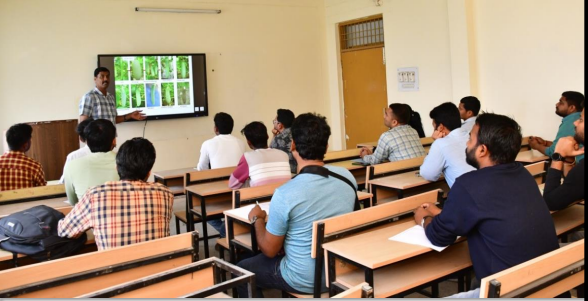
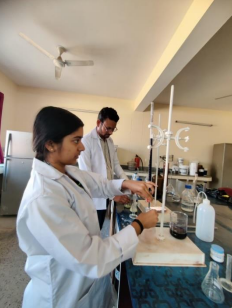
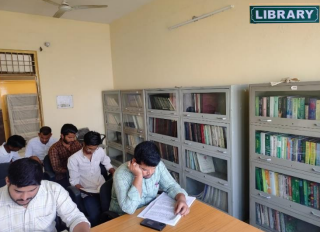
  • Main department building within College of horticulture and Forestry having two PG smart class rooms, UG laboratory, PG laboratory, Library, Seminar room, staff rooms, office room, farm office and store rooms.
  • Research cum Seed Production farm having a total land area of 40 Acres.
  • Well organized vegetable seed and pro-tray seedling production of deferent vegetables and spices.
  • Developed infrastructure for seed production and processing unit under hall of 1000 sq.ft. built-up area.
  • In 2023-24, a total of 50q of vegetable seeds produced and supplied to farmers.
  • Average annual revenue from the sale of vegetables seeds and pro-tray seedlings of vegetables Rs. 10 lakhs.
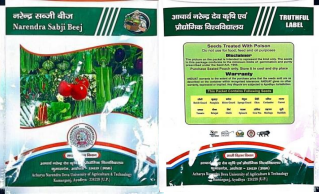
  • Prepared Narendra Sabji Beej for kitchen garden.
  • Farm rooms and shades: 06 Nos.
  • Protected cultivation structures: 5 Nos.
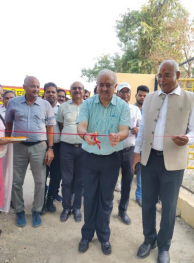
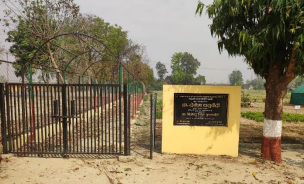
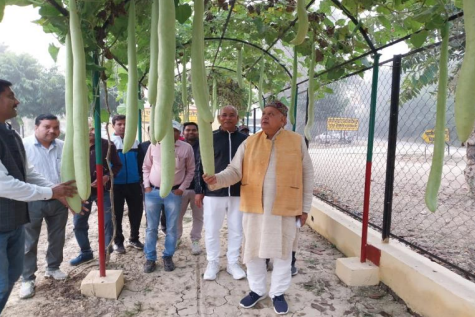
  • Vegetable Technology Park.

Faculty Of The Department

S. NoNameDesignationDepartment
1.Dr. C.N. RamProfessor and HeadDepartment of Vegetable Science
2.Dr. Pradeep KumarAssociate ProfessorDepartment of Vegetable Science
3.Dr. Aastik Jha Assistant ProfessorDepartment of Vegetable Science
4.Dr. Anil Kumar Assistant ProfessorDepartment of Vegetable Science
5.Dr. Ashish Kr. SinghAssistant ProfessorDepartment of Vegetable Science
6.Dr. D. K. UpadhyayAssistant ProfessorDepartment of Vegetable Science
7.Dr. Sanjeev SinghAssistant ProfessorDepartment of Vegetable Science
8.Dr. Pradeep Kumar DalalAssistant ProfessorDepartment of Vegetable Science
9.Dr. Manoj Kr MauryaAssistant ProfessorDepartment of Vegetable Science

Teaching Faculty

Dr. C.N. Ram

Professor & Head

Dr. Pradeep Kumar

Associate Professor

Dr. Aastik Jha

Assistant Professor

Dr. Anil Kumar

Assistant Professor

Dr. Ashish Kr. Singh

Assistant Professor

Dr. D. K. Upadhyay

Assistant Professor

Dr. Sanjeev Singh

Assistant Professor

Dr. Pradeep Kumar Dalal

Assistant Professor

Dr. Manoj Kr Maurya

Assistant Professor

Degree Program offered in the Department

The department is imparting teaching and research education for undergraduate and postgraduate students in the field of Vegetable Science and department offer program in M.Sc. (Horticulture) in Vegetable Science and Ph.D. (Horticulture) Vegetable Science. The Department offers various courses for cultivation of tropical, subtropical, temperate and underground crops and courses related to breeding and seed production of vegetables, spices and tuber crops as well as protected cultivation of vegetable crops for undergraduate, postgraduate and Ph.D. students. The annual seats offered under post-graduate and Ph.D. are 22 and 8, respectively.

Courses

The department offers nine UG courses, two experiential learning course, 14 PG courses and eight Ph.D. courses provides strong academic guidance to the students.

➤ A. Courses for UG Programme

Agriculture
S.No. Name of course Course Code Credit hours Semester
1 Production Technology of Vegetable and Spices HORT-211 2(1+1) III
Subtotal 2(1+1)
Horticulture
2 Principles of Genetics and Cytogenetics GPB-111(H) 3(2+1) I
3 Principles of Plant Breeding GPB-121(H) 3(2+1) II
4 Temperate Vegetables VS-211(H) 3(2+1) III
5 Spices and Condiments VS-221(H) 3(2+1) IV
6 Precision Farming and Protected Cultivation VS-222(H) 3(2+1) IV
7 Breeding of Vegetable, Tuber and Spice Crops VS-311 (H) 3(2+1) V
8 Potato and tuber crops VS-312 (H) 3(2+1) V
9 Seed Production of Vegetable, Tuber and Spice Crops VS-321 (H) 3(2+1) VI
10 Commercial Horticulture ELP-411(H) 10(0+10) VII
11 Processing of Fruits and Vegetables for Value Addition ELP-412(H) 10(0+10) VII
Total (A) 46(17+29)
Sub total 44(16+28)

➤ B. Course for PG Programme

M.Sc.
S.No. Name of course Course Code Credit hours Semester
1 Production of Warm Season Vegetable Crops VSC-511 (N)* 3(2+1) I
2 Principles of Vegetable Breeding VSC 512 (N)* 3(2+1) I
3 Systematics of Vegetable Crops VSC 513(N) 2(1+1) I
4 Processing of Vegetable VSC 514(N) 2(1+1) I
5 Production of Cool Season Vegetable Crops VSC-521 (N)* 3(2+1) II
6 Growth and Development of Vegetable Crops VSC-522 (N)* 3(2+1) II
7 Seed Production of Vegetable Crops VSC-523 (N) 3(2+1) II
8 Production of Underutilized Vegetable Crops VSC-524 (N) 3(2+1) II
9 Breeding of cross-pollinated vegetable crops VSC-525 (N) 3(2+1) II
10 Production of Spices crops VSC-526 (N) 3(2+1) II
11 Post Harvest Management of vegetable crops VSC-526 (N) 3(2+1) II
12 Organic Vegetable Production VSC 515(N) 2(1+1) III
13 Breeding of Self Pollinated Vegetable Crops VSC 516(N) 3(2+1) III
14 Protected Cultivation of Vegetable Crops VSC 517(N) 2(1+1) III
15 Master’s Seminar VSC 591(N) 1(0+1) IV
Subtotal 39(25+14)
Ph.D.
1 Recent Trends in Vegetable Production VSC-611 (N)* 3 (3+0) I
2 Advances in Breeding of Vegetable Crops VSC-612 (N)* 3 (3+0)* I
3 Seed Certification, Processing and Storage of Vegetable Crops VSC-613 (N) 3 (2+1) I
4 Biodiversity and Conservation of Vegetable Crops VSC-614 (N) 3(2+1) I
5 Breeding for special traits in Vegetable Crops VSC-621 (N) 2 (2+0) II
6 Biotechnological approaches in Vegetable Crops VSC-622 (N) 3 (2+1) II
7 Abiotic Stress Management in Vegetable crops VSC-623 (N) 3 (2+1) II
8 Advanced laboratory techniques for vegetable crops VSC-624 (N) 3 (1+2) II
9 Doctoral Seminar-I VSC-691 (N) 1 (0+1) II
10 Doctoral Seminar-II VSC-692 (N) 1 (0+1) II
Sub total 25 (17+8)
Total (B) 64 (42+22)
Grand Total (A+B) 110 (59+51)
*Compulsory among major courses

Smart Classroom

PG Laboratory & Library

Vegetable Technology Park

Kitchen garden Kit

MES Vegetable

Germplasm

The department is enriched with active germplasm collection of major vegetable and spice crops like tomato, brinjal, chilli, okra, bottle gourd, bitter gourd, cucumber, pointed gourd, pumpkin, sponge gourd, ridge gourd, snake gourd, watermelon, muskmelon, cowpea, vegetable pea, tuber crops, turmeric, fenugreek, funnel, coriander etc. This germplasm collection serves as a valuable resource for breeding programs and genetic conservation efforts. Department has conserved a total of 678 vegetable and 724 spices germplasms. The germplasms details are given below

S.No. Crops Number of germplasms
Vegetables
1 Bottle gourd 40
2 Bitter gourd 34
3 Pumpkin 48
4 Sponge gourd 50
5 Ridge gourd 20
6 Ash gourd 25
7 Cucumber 32
8 Pointed gourd 09
9 Long melon 18
10 Round melon 15
11 Muskmelon 22
12 Watermelon 15
13 Tomato 45
14 Cherry tomato 32
15 Brinjal 80
16 Okra 34
17 Chili 23
18 Green Mustard 24
19 Summer Squash 27
20 Garden Pea 35
21 Moringa 15
22 Carrot 10
23 Radish 15
24 Cowpea 10
Total 678
Spices
25 Ginger 66
26 Turmeric 186
27 Coriander 141
28 Fenugreek 148
29 Fennel 100
30 Black cumin 37
31 Ajwain 46
Total 724
Grand Total 1402

AICRPs

Three All India Coordinated Research Project are also running in the department namely AICRP on vegetable crops, AICRP on Potato and AICRP on spices. University recognized as sub centre under AICRP (Vegetable crops) during 1980 has initiated work on crop improvement, production including seed production and crop protection technologies. The important crops covered are brinjal, chilli, tomato, cauliflower, French bean, peas, okra, cucumber, bottle gourd and some other cucurbits. Till today 52 high yielding varieties of different vegetable crops have been developed and released for general cultivation by State/Central Variety Release Committee. Besides this, more than 10 different recommendations have been made on improved vegetable production and plant protection technologies for the benefit of farmers of the State. AICRP on Potato started in year 1985 for improvement, production and protection technologies. AICRP on spices started in year 1996 for improvement, production and protection technologies which covers ginger, turmeric, coriander, cumin, fennel, fenugreek and ajwain. To popularize the cultivation of seed spices in the state as well as to achieve the aim of self-reliance in spices production at national level, quality seed production of high yielding varieties and the development programmes like technology transfer through FLDs, seminar/ workshops and farmers training are also being done.

Technologies

Due emphasis has also been accorded to standardize the production and protection technologies in different vegetables and spices. Around fifteen agro-techniques have been standardized for vegetable cultivation including agro-techniques for improved cultivation practices, plant protection technology and seed production. The technologies developed by the department are being popularized among farmers through training & demonstrations. These technologies have been mentioned as below (last 10 years).

S.No. Name of Technology Year Detail of technology Attributes
1 Response of sulphur and molybdenum for cowpea production 2013 Application of molybdenum (3spray at 45, 55 and 65 DAS) @ 25ppm+sulphur @15 kg/ha along with NPK (60:60:40 kg/ha) resulted maximum pod yield (108.92 q/ha) with B:C ratio of 2.03 in cowpea cv. Kashi Kanchan with spacing of 50cm x 30 cm.
2 Organic production of amaranth 2013 Application of recommended dose of NPK (100:50:50 kg/ha) resulted maximum biomass yield (208.14q/ha) with B:C ratio of 5.87 in Amaranth cv. Arka Saguna with spacing of 15cm x 5 cm against organic production using different organic manures alone and in combination with bio-fertilizers.
3 Low tunnel production technology for early harvest of cucurbits (Bitter gourd) 2014 Bitter gourd cv. Jaunpuri Karela with spacing of 2m x0.5cm and NPK @ 150:60:60 Kg/ha revealed that the sowing under different conditions had significant effect on early harvest of fruit yield of bitter gourd. The maximum marketable fruit yield (87.92q/ha) with B:C ratio of 1.74 was recorded when crop was sown on 15th December under low tunnel condition which was followed by 15th February transplanting in open field (79.95q/ha) with B:C ratio of 1.45. Hence,15th December sowing under the low tunnel with the spacing of 2.0mx 0.50 m along with nutrient dose of N:P:K @ 150:60:60 is recommended as low tunnel production technology for early harvest of cucurbits (Bitter gourd).
4 Standardization of water requirement for turmeric through drip irrigation 2015 Drip once in two days at 80% pan evaporation with 4 l/h resulted in increase in yield by 10-15 % in turmeric.
5 Bio-fertilizers for yield enhancement of coriander 2017 Soil application of Phosphate Solubilizing Bacteria (PSB) @15 kg ha-1 or Azospirillum @15 kg ha-1 along with NPK @ 60:40:30 kg/ha is recommended for improving the productivity of coriander.
6 Potato – Production Technology 2018 Application of 100 kg P2O5/ha with recommended dose of 150 kg N/ha & K2O/ha.
7 Potato – Cropping sequence Technology 2019 Planting of potato at optimum date from 25th October to 5th November, harvesting at 90 days and transplanting onion thereafter.
8 Management of turmeric foliar diseases- leaf spot (Colletotrichum capsici) and leaf blotch (Taphrina maculans): 2021 Rhizome treatment with propiconazole (0.1%) and foliar spray of propiconazole (0.1%) was recommended for the management of turmeric foliar diseases – leaf spot (Colletotrichum capsici) and leaf blotch (Taphrina maculans).
9 Management of coriander powdery mildew (Erysiphe polygoni) 2021 Spraying propiconazole (0.1 %) at theinitiation of the disease followed by second spray 15 days after first spray was ecommended for the management of coriander powdery mildew (Erysiphe polygoni).
10 Management of stem gall disease of coriander 2021 A ready mixture of fungicidal formulation containing Azoxystrobin 11% + tebuconazole 18.3% SC has been recommended for management of stem gall disease of coriander.
11 Potato – Integrated Nutrient Management Technology Application of 2/3rd nitrogen (100 kg/ha) through inorganic fertilizer and remaining 1/3rd nitrogen through FYM is recommended.
12 Seed spices: Intercropping of seed spices with vegetables for higher yield and income 2023 Intercropping of coriander with garlic is an excellent way to increase productivity (44.2 over 14.8 q/ha) and profitability, with the highest benefit-to-cost (B:C) ratio (2.86 over 1.8) from the coriander sole cropped area.
13 Fennel: Foliar application of iron and zinc on growth, yield and quality of fennel: 2023 Foliar spray of zinc sulphate and iron sulphate, each @ 4g/l with RDF at 60, 75 and 90 days after sowing in fennel is recommended for higher yield of 14.7% over untreated and net returns with high BC ratio of 20.8% over untreated plot.
14 Coriander: Integrated pest and disease management in coriander 2023 Three sprays of Hexaconazole 5 EC@ 0.005% + First foliar spray of Emamectin benzoate-5%SG@ 4.0g/10 lit and second spray of Azadiractin 3000 ppm @ 3 ml/lit is effective for the management of stem gall, PM and aphid.

Varieties

The department, the backbone of developing, evaluating, releasing and commercializing crop varieties, has significantly helped farming communities. Department has released 52 varieties of vegetables and 11 varieties of spices. Many of these are in the seed production chain and grown in U.P., Bihar, Jharkhand, Punjab, Uttarakhand and Chhattisgarh. The departmental legacy of breeding bottle gourd and Haldi is nationally recognized. Our higher-degree students are already conducting part of their research at ICAR institutes like ICAR-IIVR, Varanasi, and ICAR-IARI, New Delhi. These are excellent synergistic platforms to build research capacity and improve scientific outcomes. The varieties details are given below –

S.No. Crops Number of varieties/Hybrid
Vegetables
1. Bottle gourd 12
2. Tomato 08
3. Garden Pea 06
4. Pumpkin 04
5. Brinjal 04
6. Pointed gourd 03
7. Colocasia (Arvi) 03
8. Elephant Foot Yam 02
9. Banda (Alocasia Sps.) 02
10. Cowpea 02
11. Muskmelon 02
12. Sweet Potato 02
13. Bitter gourd 01
14. Okra 01
Total 52
Spices
15. Turmeric 05
16. Fenugreek 03
17. Coriander 02
18. Fennel 01
Total 11
Grand Total 63